Fulbright Scholarship (Fully Funded) for International Students to Study in USA (2022)

practicalintroduction.com


The world’s most popular, highly acknowledged and widely welcomed plus most prestigious award – Fulbright Foreign Student Program USA is out now to grab. International students, whose nationalities are eligible, can now submit their applications for this mammoth and gigantic opportunity offered to the students of the world each year. The USA Government scholarship has now been announced for this year. More details about this scholarship opportunity are mentioned in below lines.


Information about Fulbright Foreign Student Program USA

The scholarship opportunity is for Masters and PhD programs. The deadline for this opportunity varies – it is between February 2022 to October 2022. To check your deadline, visit the official source. International students are welcome to apply to this opportunity. More than 160 countries are in the list which students can submit their applications for this facility.


Brief Description about Fulbright Foreign Student Program 

The information about this scholarship opportunity is now presented in a brief manner for the applicants so that they can understand everything clearly.


Country: United States of America


Universities / Institutions : Participating Universities and institutions in the USA


Programs: Masters and PhD


Financial Coverage: Fully Funded


About Fulbright Foreign Student Program

The program is for the academic year of 2023-2024. The deadline for the program varies and will be between February to October 2022. The scholarship is for Masters and PhD programs. This opportunity lets the graduate students, artists and young professionals from the world to study and conduct their research activities in the USA at the universities in the U.S. or other institutions.

The program operates in above 160 countries of the world. Each year, around 4000 foreign students receive this opportunity. The scholarship is administered by U.S. embassies, Fulbright commission/foundations. The applications for the scholarships are also processed by these offices.


Academic Fields

The academic fields for Fulbright foreign student program 2023-24 are for all fields including interdisciplinary ones.


Number of Scholarships Available

Each year, around 4000 scholarships are conferred to the students.


Eligible Countries

More than 160 countries of the world are eligible which students can submit their applications for this program. To check your country, you can check at the official page.


Financial Benefits for Fulbright Student Program USA

The successful applicants are granted with fully funded scholarships. The coverage includes:

  • Tuition fees
  • Living stipend
  • Health insurance
  • Airfare


Note: Fulbright program endows the students with funding for the whole duration of study.


Eligibility Criteria for Scholarship

The eligibility and selection criteria for the scholarship vary from country to country. To learn exact details and information, the applicants are advised to visit the country specific websites to check everything about the program according to their home country. To get comprehensive and accurate Fulbright scholarship requirements for international students, you may visit the official page to check country specific websites.


Deadline for Applications

The last submission date for the applications varies. Check country specific websites to learn your deadline for applications.


How to Apply for Fulbright Foreign Student Program USA

Since the procedure of applications varies country to country, the applicants are required to visit the county specific websites to learn how to apply for Fulbright scholarship.  For your country’s details, you can visit country specific websites. To learn about official details for Fulbright program, visit this official page.


official page : https://foreign.fulbrightonline.org/about/foreign-student-program


country specific websites : https://foreign.fulbrightonline.org/apply


Share:

Introduction About General Quantum Physics

practicalintroduction.com


What is quantum physics? Put simply, it’s the physics that explains how everything works: the best description we have of the nature of the particles that make up matter and the forces with which they interact.


Quantum physics underlies how atoms work, and so why chemistry and biology work as they do. You, me and the gatepost – at some level at least, we’re all dancing to the quantum tune. If you want to explain how electrons move through a computer chip, how photons of light get turned to electrical current in a solar panel or amplify themselves in a laser, or even just how the sun keeps burning, you’ll need to use quantum physics.


The difficulty – and, for physicists, the fun – starts here. To begin with, there’s no single quantum theory. There’s quantum mechanics, the basic mathematical framework that underpins it all, which was first developed in the 1920s by Niels Bohr, Werner Heisenberg, Erwin Schrödinger and others. It characterises simple things such as how the position or momentum of a single particle or group of few particles changes over time.


But to understand how things work in the real world, quantum mechanics must be combined with other elements of physics – principally, Albert Einstein’s special theory of relativity, which explains what happens when things move very fast – to create what are known as quantum field theories.


Three different quantum field theories deal with three of the four fundamental forces by which matter interacts: electromagnetism, which explains how atoms hold together; the strong nuclear force, which explains the stability of the nucleus at the heart of the atom; and the weak nuclear force, which explains why some atoms undergo radioactive decay.


Over the past five decades or so these three theories have been brought together in a ramshackle coalition known as the “standard model” of particle physics. For all the impression that this model is slightly held together with sticky tape, it is the most accurately tested picture of matter’s basic working that’s ever been devised. Its crowning glory came in 2012 with the discovery of the Higgs boson, the particle that gives all other fundamental particles their mass, whose existence was predicted on the basis of quantum field theories as far back as 1964.


Conventional quantum field theories work well in describing the results of experiments at high-energy particle smashers such as CERN’s Large Hadron Collider, where the Higgs was discovered, which probe matter at its smallest scales. But if you want to understand how things work in many less esoteric situations – how electrons move or don’t move through a solid material and so make a material a metal, an insulator or a semiconductor, for example – things get even more complex.


The billions upon billions of interactions in these crowded environments require the development of “effective field theories” that gloss over some of the gory details. The difficulty in constructing such theories is why many important questions in solid-state physics remain unresolved – for instance why at low temperatures some materials are superconductors that allow current without electrical resistance, and why we can’t get this trick to work at room temperature.


But beneath all these practical problems lies a huge quantum mystery. At a basic level, quantum physics predicts very strange things about how matter works that are completely at odds with how things seem to work in the real world. Quantum particles can behave like particles, located in a single place; or they can act like waves, distributed all over space or in several places at once. How they appear seems to depend on how we choose to measure them, and before we measure they seem to have no definite properties at all – leading us to a fundamental conundrum about the nature of basic reality.


This fuzziness leads to apparent paradoxes such as Schrödinger’s cat, in which thanks to an uncertain quantum process a cat is left dead and alive at the same time. But that’s not all. Quantum particles also seem to be able to affect each other instantaneously even when they are far away from each other. This truly bamboozling phenomenon is known as entanglement, or, in a phrase coined by Einstein (a great critic of quantum theory), “spooky action at a distance”. Such quantum powers are completely foreign to us, yet are the basis of emerging technologies such as ultra-secure quantum cryptography and ultra-powerful quantum computing.


But as to what it all means, no one knows. Some people think we must just accept that quantum physics explains the material world in terms we find impossible to square with our experience in the larger, “classical” world. Others think there must be some better, more intuitive theory out there that we’ve yet to discover.


In all this, there are several elephants in the room. For a start, there’s a fourth fundamental force of nature that so far quantum theory has been unable to explain. Gravity remains the territory of Einstein’s general theory of relativity, a firmly non-quantum theory that doesn’t even involve particles. Intensive efforts over decades to bring gravity under the quantum umbrella and so explain all of fundamental physics within one “theory of everything” have come to nothing.


Meanwhile cosmological measurements indicate that over 95 per cent of the universe consists of dark matter and dark energy, stuffs for which we currently have no explanation within the standard model, and conundrums such as the extent of the role of quantum physics in the messy workings of life remain unexplained. The world is at some level quantum – but whether quantum physics is the last word about the world remains an open question.


Share:

Renewable Energy From Combustion, Pyrolysis, and Gasification of Waste-Derived Fuel Slurries, Low-Grade Liquids, and High-Moisture Waste

practicalintroduction.com


The problems of the annual formation of industrial waste are common to a wide group of industries, particularly chemical, petrochemical, coal, gas, and wood processing. The most typical wastes of these industries are coal tar, waste oils, oil sludge, filter cakes, coal slime, sawdust, wood shavings, etc. 

Most of these materials and components pose a significant environmental threat. Waste occupies large areas and penetrates soil and water; gradual thermochemical transformation of waste is accompanied by the release of hazardous substances. The most common methods of industrial waste disposal are the following: burial, removal of impurities, storage, and reuse for its intended purpose, use as secondary raw material in oil refining and coal preparation, pelletizing, pyrolysis, gasification, and combustion. Most of the treatment and cleaning methods are quite ineffective for large volumes of industrial waste. 

At the same time, many enterprises are forced to incur heavy losses due to environmental fines associated with ineffective waste disposal or its absence. Disruptive technologies are required for efficient waste disposal. However, their creation and adaptation require significant economic costs at the initial stage.

Municipal waste is no less dangerous for humanity. In terms of component composition, accumulated volumes, and rates of annual formation, they are practically not inferior to industrial ones. In countries with undeveloped economies, municipal solid waste is considered even more hazardous than industrial waste. The most typical municipal solid waste includes cardboard, paper, plastic, polyethylene, rubber, food debris, etc. Landfilling, thermal treatment, and incineration with energy generation are popular disposal methods for such waste. Holubˇcík et al. used slow pyrolysis of shredded used car tires and plastic packaging.

The research has confirmed that pyrolysis allows for the production of valuable products with minimal damage to the environment. Bala-Litwiniak and Radomiak have shown that waste glycerol can be successfully used as a fuel in combination with wood pellets. Glycerin with a fraction of no more than 4.5% improved the quality of the pellets and the environmental performance. Dudy ´nski et al. carried out a test gasification of leather waste on a laboratory and industrial scale. As a result, a producer gas was obtained with a heating value of 4.1–6.5 MJ/m3. Dudy ´nski et al. concluded that gasification of waste leather may be more promising than incineration, mainly due to greater environmental safety. However, the rate of the annual increase in municipal waste is so high that the factories for their utilization manage to process no more than 20–30%. The main difficulty lies in the need to sort waste to ensure high economic performance. 

Unfortunately, in many regions, management mechanisms and regulatory documents have not been formed for the effective separation of waste. As a result, numerous landfills increase in volume every year. Waste disposal technologies without preliminary sorting are important.


practicalintroduction.com


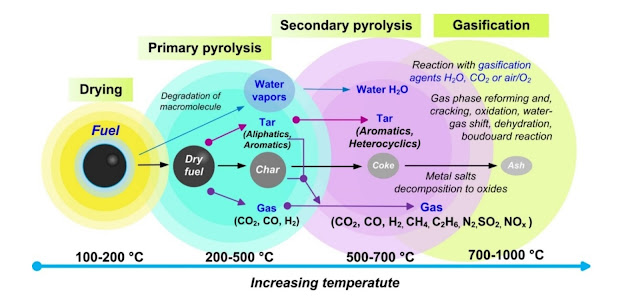
The article discusses the modern achievements in the field of thermal recovery of industrial and municipal waste. The average accumulation rate and calorific value of typical wastes were analyzed. The focus is on the opportunities to exploit the energy potential of high-moisture waste, low-grade liquid components, and fuel slurries. With consider the relevant results in the field of combustion, pyrolysis, and gasification of such fuels.

The main attention is paid to synergistic effects, the influence of additives, and external conditions on the process performance. Vortex combustion chambers, boilers with burners, and nozzles for fuel injection, grate, and fluidized bed boilers can be used for the combustion of waste-derived liquid, high-moisture, and slurry fuels. 


practicalintroduction.com


The following difficulties are possible: long ignition delay, incomplete combustion, low combustion temperature and specific calorific value, high emissions (including particulate matter, polycyclic aromatic hydrocarbons), fast slagging, and difficult spraying. A successful solution to these problems is possible due to the use of auxiliary fuel; boiler modifications; oxy-fuel combustion; and the preparation of multi-component fuels, including the use of additives. An analysis of methods of waste recovery in the composition of slurries for fuel gas production showed that there are several main areas of research: pyrolysis and gasification of coal–water slurry with additives of oil waste; study of the influence of external conditions on the characteristics of final products; and the use of specialized additives and catalysts to improve the efficiency of the pyrolysis and gasification. The prospects form improving the characteristics of thermochemical conversion of such fuels are highlighted.


Conclusions


(i) Almost all typical industrial and solid domestic waste has a calorific value comparable to low-grade fuels. The average calorific value of such waste is 7–12 MJ/kg. As a consequence, this waste can be considered promising for energy production. This approach helps to reduce the rate of depletion of fossil fuels, expand the fuel base of many countries, and reduce their economic and energy dependence.


(ii) The combustion of waste-derived liquid, high-moisture, and slurry fuels can be efficiently implemented using boilers of various modifications such as vortex combustion chambers, boilers with burners, and nozzles for fuel injection, grate, and fluidized bed boilers.


(iii) The combustion of waste-derived fuel slurries and high-moisture fuels can be complicated by a long ignition delay time, low combustion temperature, and low specific calorific value. However, this approach provides wide possibilities for varying the composition of the mixture, atomization, increasing the completeness of fuel burnout, and reducing some hazardous emissions.


(iv) The combustion of fuel mixtures, in contrast to the combustion of individual components, provides more opportunities for stabilizing important process parameters (combustion temperature, calorific value, etc.) and obtaining synergistic benefits (for example, a significant reduction in sulfur oxide emissions).


(v) The present review of pyrolysis and gasification of waste-derived fuel slurries summarizes the main parameters influencing the optimization of the yield of gaseous products. Temperature is one of the most important factors affecting the yield and properties of the end products of pyrolysis and gasification. Optimal process temperatures in terms of maximizing gas yield are above 600 ◦C. High temperatures and long residence times favor the formation of non-condensable gaseous products due to secondary decomposition reactions.


(vi) Pyrolysis and gasification in a steam medium are more efficient in terms of maximizing the yield of hydrogen compared to air. From this point of view, the use of water-containing slurry fuels is a promising direction. A substantial part of the gasifier steam requirement can be covered by the generation of steam from the slurry.


(vii) The processes of pyrolysis and gasification of oil wastes in the slurry fuels is an effective option for maximizing gas and liquid products and a promising way to dispose of accumulated waste as fuel with low energy losses. This could conserve fossil fuels and solve the problem of increasing energy demand.

Share:

Binance was Removed From Its Blockchain Ecosystem and It was Renamed to BNB Chain

practicalintroduction.com


Crypto exchange Binance has renamed its blockchain ecosystem in a move that suggests the company does not want to be directly associated with the blockchain and its token.


Its blockchain ecosystem, previously known as Binance Smart Chain, has now been renamed to BNB Chain, and its token BNB — once known as Binance coin — has now been rechristened as "Build and Build."


“Over the years, we’ve realized that BNB has evolved into something beyond Binance and in fact, BNB means Build and Build (not Binance Coin), it’s something CZ has tweeted before," Samy Karim, BNB Chain ecosystem coordinator, told The Block. "The BNB ecosystem is bigger than Binance, and has transcended Binance in terms of its use cases."


The official announcement comes a week after Binance CEO Changpeng "CZ" Zhao tweeted that BNB stands for "Build'N Build," i.e., build the community and let the community build.


The removal of the Binance name will provide BNB Chain "with more opportunities and freedom to seek innovations," said the company. BNB Chain will also become multi-chain, it added.


"BNB Chain will embrace large-scale applications, including GameFi, SocialFi and the Metaverse. In particular, scaling from one chain to multi-chain, improving scaling solutions and expanding the validator set of BSC from 21 to 41 (with 20 validators functioning as candidate block producers)," said Karim.


Along with the name change, Binance has also come up with a new concept called MetaFi — a combination of two words — Meta (metadata) and Fi (DeFi). Through MetaFi, the BNB Chain community aims to build infrastructure for various projects, including GameFi, SocialFi, Web3, and NFTs, under one umbrella.


"MetaFi is a future all-encompassing ecosystem that promises to deliver a paradigm shift that will enable seamless interoperability between different projects and blockchains," said Binance. "The combination of these different blockchain projects enables a full-fledged parallel ecosystem serving users from around the globe."


Share:

Cavity Magnon-polaritons in Cuprate Parent Compounds (Published 15 June 2021) - Management Practicalintroduction

Management Practicalintroduction


Using light to control the properties of quantum materials not only holds the potential to realize new and interesting quantum many-body phases, but may also hold the key to create novel devices and functionalities. In most cases, this optical control is achieved by externally applying intense electromagnetic radiation to the system in question. Recently however, an appealing alternative route has been put forward which bypasses the need for intense external radiation. Instead ,one may attempt to use resonantly-coupled electromagnetic cavities to custom-tailor the properties of the electromagnetic vacuum-fluctuations directly.

A potentially powerful application of this approach is to use cavities to control antiferromagnetic correlations in a high-Tc cuprate superconductor. These correlations are believed to underlie many of the exotic, and potentially useful, aspects of the unconventional high-Tc superconductivity in these materials.

It therefore stands to reason that the ability to optically manipulate, and ultimately enhance, superconductivity in these materials is extremely appealing from both a theoretical and practical perspective, and may pave the way towards realizing room-temperature superconductivity—a “holy-grail” of modern condensed matter and material science. The concept of using cavities to manipulate superconductivity has already been put forward in the context of electron-phonon systems .

In this case, it has been proposed that strongly coupling resonant cavities to infrared-active optical phonons may offer away to manipulate the pairing between electrons in “conventional” superconductors. While indeed this may be a promising avenue towards achieving cavity-enhanced superconductivity, these systems still remain fundamentally limited by the relatively weak coupling strengths afforded by electron-phonon interaction. 

In contrast, while the exact mechanism responsible for superconductivity in cuprates is still unclear, it is widely believed to be driven by interactions of electrons with spin-fluctuations rather than phonons. As a result, these systems have a higher “ceiling” for potential enhancement effects. At the same time it is also less clear how cavities may be used to modify these spin-fluctuations. Motivated by these considerations, we propose a scheme for realizing strong coupling of a resonant cavity to the spin fluctuations in an antiferromagnetic cuprate parent compound.

Cavity control of quantum matter may offer new ways to study and manipulate many-body systems. A particularly appealing idea is to use cavities to enhance superconductivity, especially in unconventional or high-Tc systems. Motivated by this, we propose a scheme for coupling Terahertz resonators to the antiferromagnetic fluctuations in a cuprate parent compound, which are believed to provide the glue for Cooper pairs in the superconducting phase. 

First, with derive the interaction between magnon excitations of the Ne´el-order and polar phonons associated with the planar oxygens. This mode also couples to the cavity electric field, and in the presence of spin-orbit interactions mediates a linear coupling between the cavity and magnons, forming hybridized magnon-polaritons. This hybridization vanishes linearly with photon momentum, implying the need for near-field optical methods, which we analyze within a simple model then derive a higher-order coupling between the cavity and magnons which is only present in bilayer systems, but does not rely on spin-orbit coupling. This interaction is found to be large, but only couples to the bimagnon operator. 

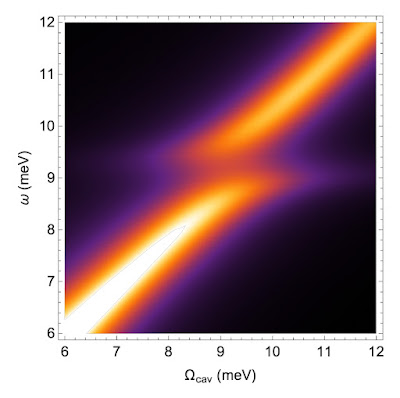
As a result find a strong, but heavily damped, bimagnon-cavity interaction which produces highly asymmetric cavity line-shapes in the strong-coupling regime. To conclude, we outline several interesting extensions of our theory, including applications to carrier-doped cuprates and other strongly-correlated systems with Terahertz-scale magnetic excitations.


Management Practicalintroduction


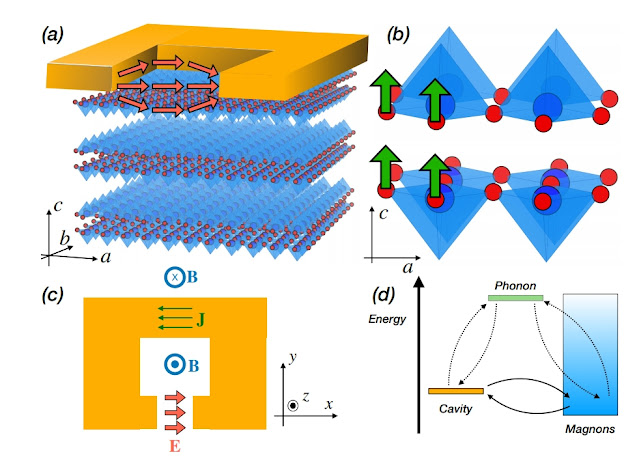
Overview of our proposal for forming cavity magnon-polaritons in insulating cuprates. (a) Depiction of the combined cavity-sample system. We consider placing the resonator on top of the cuprate (YBCO) sample, which is quasi-two dimensional and consists of layers of copper-oxide bilayers (for clarity we only depict the planar copper and oxygen atoms). The resonator produces a strong electric field (red arrows) which penetrates into the sample and couples to the magnons via the scheme outlined in Sec. II. (b) The phonon mode we consider in this paper, shown in a simplified depiction of the YBCO unit cell, is associated to the infrared-active motion of planar oxygens along the c-axis and strongly couples to both the cavity photons and the magnons in the cuprate. (c) Depiction of a typical split-ring resonator, which we use to model the Terahertz cavity in this work. Current flows through the metallic ring, inducing a magnetic field, as well as producing an electric field in the capacitive gap. (d) Cavity photon mode (gold) is constructed to lie close to the bottom of the magnon band (blue continuum), which are the two degrees we wish to couple to each other. The magnon-cavity coupling is mediated by virtual phonons, which both systems couple to directly. Because the phonon mode in question is higher in frequency than the relevant magnons and cavity, it can be adiabatically eliminated, yielding the desired cavity-magnon coupling.


reference :

S. Choi, J. Choi, R. Landig, G. Kucsko, H. Zhou, J. Isoya, F. Jelezko, S. Onoda, H. Sumiya, V. Khemani, C. v. Keyserlingk, N. Y. Yao, E. Demler, and M. D. Lukin, Observation of discrete time-crystalline order in a disordered dipolar many-body system, Nature (London) 543, 221 (2017).


M. Heyl, Dynamical quantum phase transitions: A review, Rep. Prog. Phys. 81, 054001 (2018).


Jonathan B. Curtis, Andrey Grankin, Nicholas R. Poniatowski, Victor M. Galitski, Prineha Narang, and Eugene Demler, Cavity magnon-polaritons in cuprate parent compounds, Cond-mat.str-el, (2021).

Share:

First Fully 3D Printed and Flexible OLED Display - Management Practicalintroduction

Management Practicalintroduction


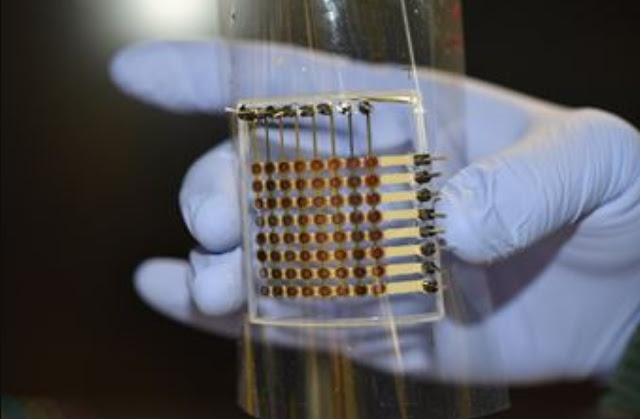
The customized 3D printing of a flexible organic light-emitting diode (OLED) display has been developed by a team from the University of Minnesota Twin Cities in the United States. Their breakthrough, which is based on the conversion of electricity into light using an organic material layer, could lead to inexpensive OLED displays for handheld or wearable electronics made at home using 3D printers.


OLEDs function as high-quality digital displays that can be produced in a flexible way and used in a range of devices, from television screens and monitors to the ubiquitous smartphone. 

While these displays have become more widely used as they are light, thin, flexible, and power-efficient, and bring a wide viewing angle and high contrast ratio, they are usually produced in large cleanroom-based semiconductor fabrication facilities using expensive equipment.

However, in this study, which was reported in the journal Science Advances 

[Su et al. Sci. Adv. (2022) DOI: 10.1126/sciadv.abl8798] 

the researchers were investigating if OLED displays could be fully made on a table-top 3D printer by combining two different modes of printing to print the six device layers for an OLED display. 

The team had already attempted to 3D print OLED displays, but had problems with the uniformity of the light-emitting layers, while other studies had managed to partially print displays but this depended on spin-coating or thermal evaporation to deposit some of the components for functional devices. Here, components such as the electrodes, interconnects, insulation and encapsulation were extrusion printed, while the active layers were spray printed using the same 3D printer but at room temperature. 

The display prototype was about 1.5 inches on each side and had 64 pixels, with each pixel being shown to work and display light. As researcher Sung Hyun Park told Materials Today, “the OLED displays were realized entirely on a ‘one-pot’ 3D printing platform in the lab...within a few hours”. Their fabrication method is flexible and could be packaged in an encapsulating material, bringing a wide variety of potential applications.

The device was found to provide reliable emission over 2,000 bending cycles, intimating that fully 3D-printed flexible OLEDs from a single printing system could be developed for applications in soft electronics and wearable devices in the same way that color printouts can be made on portable inkjet/laser printers from home.

Share:

Happy Wolrd Teacher Day

Daily Page View

Label

Adobe Acrobat Adobe Photoshop Alexa Rank Andorid Application Art Austria BUMN Beginner Belgium Blog Community Blogger Bupati Gresik CPNS/PPPK Canada Coin Market Cap Computers Cosmology Cryptocurrency Dancing Denmark Doctoral Doker Education Educational Excel Excel Table Features Film Finland French Gadget Gallery Garuda Emas Germany Google Analytics Google Form Hardware Homestay Hong Kong Ilovepdf Indrawan Vpp Interior Design Ireland Italy KKPR dan PKKPR Kampung hijau Karang Taruna Karir/Career Keyword Keywords LKPM LaTeX Linux Lowongan Kerja BUMN/SWASTA Mac Majalah Tech Material Physics Material Physics. Mechanical Engineering (ME) Microsoft 365 Microsoft Excel Microsoft Office Microsoft PowerPoint Microsoft Word NFC Nero Nero Burning 2021 Networking New Technology OSS RBA OTOMOTIF Operating Systems Optic PDF PT Aerotrans Services Indonesia (Garuda Indonesia Group) PT Astra Tol Nusantara (ASTRA Infra) PT Indomarco Prismatama (Indomaret Group) PT Indonesia Epson Industry PT Jakarta Industrial Estate Pulogadung PT Pertamina Training & Consulting (PTC) PT. Indofarma (Persero) PT. Kimia Farma Group Perizinan Berusaha Persetujuan Lingkungan Pinjaman Online Posgraduate Postgraduate PowerPoint Presentations Profil Perusahaan/Company Profil Profil-Perusahan Publisher Pyrolysis Quantum Computing Quantum Physics Quiz Renewable Energy Research SEO SWASTA Scholarship Semi conductor Semiconductor Sertifikat Halal Smartphone Spintronic Study Abroad Super Capasitor Superconductor Tata Cara Pendaftaran Surat Izin Usaha Industri (SIUI) Technology Tecnology Thailand The Best Trip & Travel Tutorial United Kingdom United Stated United States VGA card Website Windows 365 Windows Tips Word Document WordPress Zero Waste chromium tricks font iphone iphone 13 Pro iphone 13 Pro Max iphone 13 Pro Max gsmarena online zodiak